
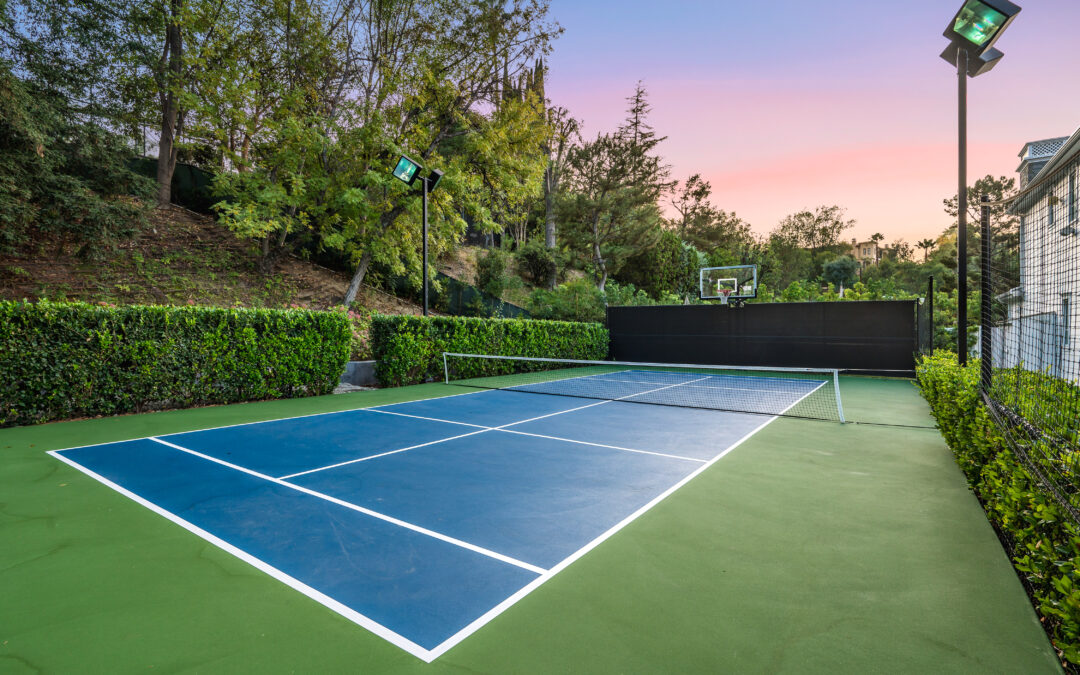
Tennis courts look beautiful because they are maintained so well. However, sometimes, they need help just as well, whether that’s pertaining to the court surface, the net, or the fence around the place. There are times when a gale bends a panel, or a ball clears a sagging top and lands in a neighbour’s greenhouse. In fact, most people agree that the fencing is often the part of tennis court maintenance that they likely forget.
Why the Fence Matters More Than It Looks
A fence does more than mark the edge/ boundary. It keeps balls on court and away from roads and gardens. It also helps with privacy, and for clubs, schools and hotels, it controls who comes and goes.
To add to this, the fencing takes a beating as well. A tall run of mesh behaves like a sail in strong wind, so the posts and fixings carry a heavy load. Height plays its part too. Too low, and balls escape. Too high or poorly secured, and the extra strain on the posts grows.
In other words, there’s no single right height. Fencing behind the baselines is usually taller than along the sides, and the ideal depends on how the court is used and what sits nearby. Most courts fall between 2.7 and 3.6 metres, so a professional with tennis court maintenance experience can judge it right.
Signs Your Fencing Is Wearing Out
Fences usually age slowly. Here are a few signs of the same.
- Rust at the base of the posts
- Mesh that sags, bulges or is torn in places
- Posts that lean/ wobble when you shake them
- Gaps under the panels where balls and animals slip through
- Ties or clips that are either loose or missing
- Ivy, brambles, and/ or branches pulling on the mesh
A few habits can help. Walk the whole perimeter every few months, and especially after a storm. Push on each post and run a hand along the mesh. You’d be surprised to know that most owners notice a problem only when something falls over, so a quick check can save you a lot of hassle down the line.
Repair or Replace? How To Decide
A repair typically makes sense when the damage is local, such as a handful of loose ties, one leaning post, or a torn section of mesh. These jobs are usually quick and cost far less to fix.
Replacement makes sense when the problem is not localised and is rather comprehensive. Widespread rust, several leaning posts, or repairs that keep returning are a few warnings that you should take note of.
Fencing also rarely fails alone. Crumbling brickwork at an entrance, worn net sockets, and moss or algae near the base/ surface often happen in the same season. Luckily, timely tennis court maintenance catches these together. In fact, this is the reason clubs, schools and businesses should act early.
Key Takeaway
A fence isn’t the most exciting part of a tennis court, and that’s probably why it often gets ignored. However, a few minutes of checking every few months, and a quick repair/ maintenance is all it takes to keep it in great shape.
At JB Tennis Court Maintenance, I have spent over 25 years building and looking after tennis courts, so I know what a worn fence or a mossy baseline is trying to tell you. Fencing is one of my specialities. I can also take care of the rest of the court: artificial grass clean-ups, pressure washing, moss removal, brickwork repairs and resetting net post sockets. Connect with me now.